

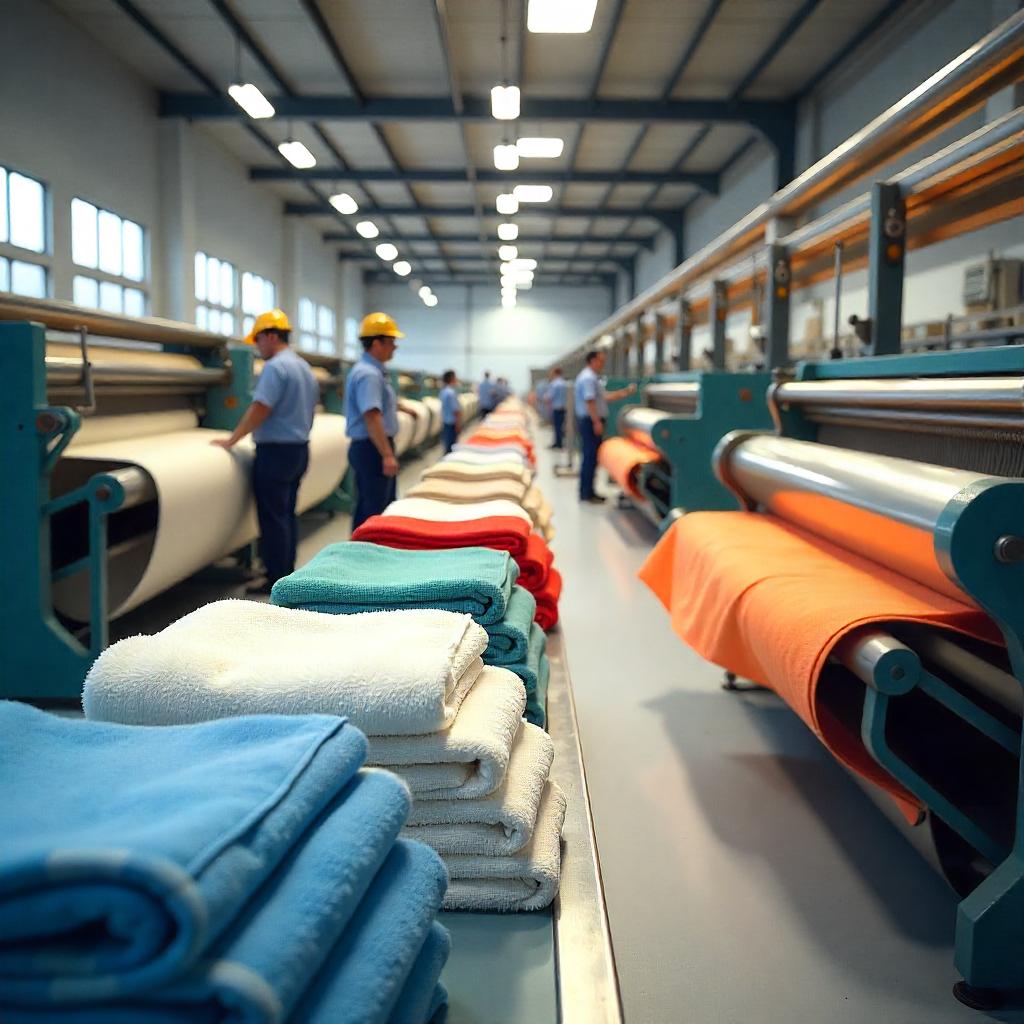
The Terry Towel Manufacturing Process in India
The terry
towel manufacturing process in India combines traditional expertise with
modern technology to produce towels known for softness, absorbency, and
durability. Here’s a step-by-step overview:
- Cotton Sourcing: Indian manufacturers use
high-quality cotton, such as Indian long-staple, Egyptian, or Supima,
sourced from regions like Gujarat and Maharashtra. Organic and sustainable
options are also popular for eco-conscious buyers.
- Yarn Spinning: Cotton is cleaned, carded,
and spun into fine yarns to ensure strength and softness, critical for high-quality
terry towel exporters in India.
- Weaving: Advanced power looms and
handlooms create the signature looped pile structure of terry towels,
which enhances absorbency. Manufacturers adjust GSM (grams per square
meter, typically 350-650) to meet client specifications.
- Dyeing and Finishing: Eco-friendly dyes are
applied to achieve vibrant colors and patterns. Finishing processes like
shearing and hemming ensure durability and a polished look.
- Quality Control: Rigorous testing for
colorfastness, absorbency, and stitching ensures towels meet international
standards, making them ideal for export quality terry towels.
- Customization: For custom terry towel
production in India, manufacturers offer tailored sizes, designs,
logos, and packaging to suit retail, hospitality, or promotional needs.
This
meticulous process, supported by hubs like Solapur and Tamil Nadu, ensures
India produces over 200,000 kilograms of towels daily, cementing its position
as a leader in terry towel production.
